Is Additive Approved by Major Regulatory Bodies? Compliance Guide
I still remember the first time a food packaging buyer asked me, "Is the additive in your CNC cutting machine FDA approved?" I paused. There was no additive. The machine cuts with a blade, not chemicals. That question taught me something important: many buyers confuse equipment compliance with material compliance, and this confusion creates unnecessary procurement delays.
CNC knife cutting machines do not use chemical additives. The compliance responsibility splits into two separate domains: equipment manufacturing standards (which we handle) and material certification for the cut product (which you or your material supplier handle). Understanding this boundary helps you focus your audit efforts in the right direction.
This confusion is not rare. I see it across food packaging, medical device, and automotive interior suppliers[^1]. Let me show you where the real compliance line sits and why this question reveals a larger misunderstanding about how mechanical cutting equipment works.
Why Do Buyers Ask About Additives in Equipment That Uses None?
The question stems from a real fear. Buyers worry that their finished product will fail a customs inspection or a client audit. They know that regulatory bodies like FDA, REACH, or ROHS impose strict rules on materials that contact food, skin, or flammable environments[^2]. So when they procure cutting equipment, they instinctively extend that same scrutiny to the machine itself.
The core issue is not technical ignorance. It is a blurred responsibility map. Buyers see "compliance" as a single monolithic requirement, when in reality it divides into upstream equipment safety and downstream material integrity.

In one case, a medical packaging supplier asked me to provide REACH test reports for "the chemicals used during cutting." I explained that our blade touches the material for a fraction of a second, leaves no residue, and introduces no foreign substance. The material being cut already carries its own certification from the material supplier. Our machine does not alter that certification status. Once the buyer understood this, the procurement conversation shifted from defensive audit preparation to practical performance evaluation. That shift saved weeks of unnecessary paperwork requests.
How Does CNC Knife Cutting Avoid Introducing Foreign Substances?
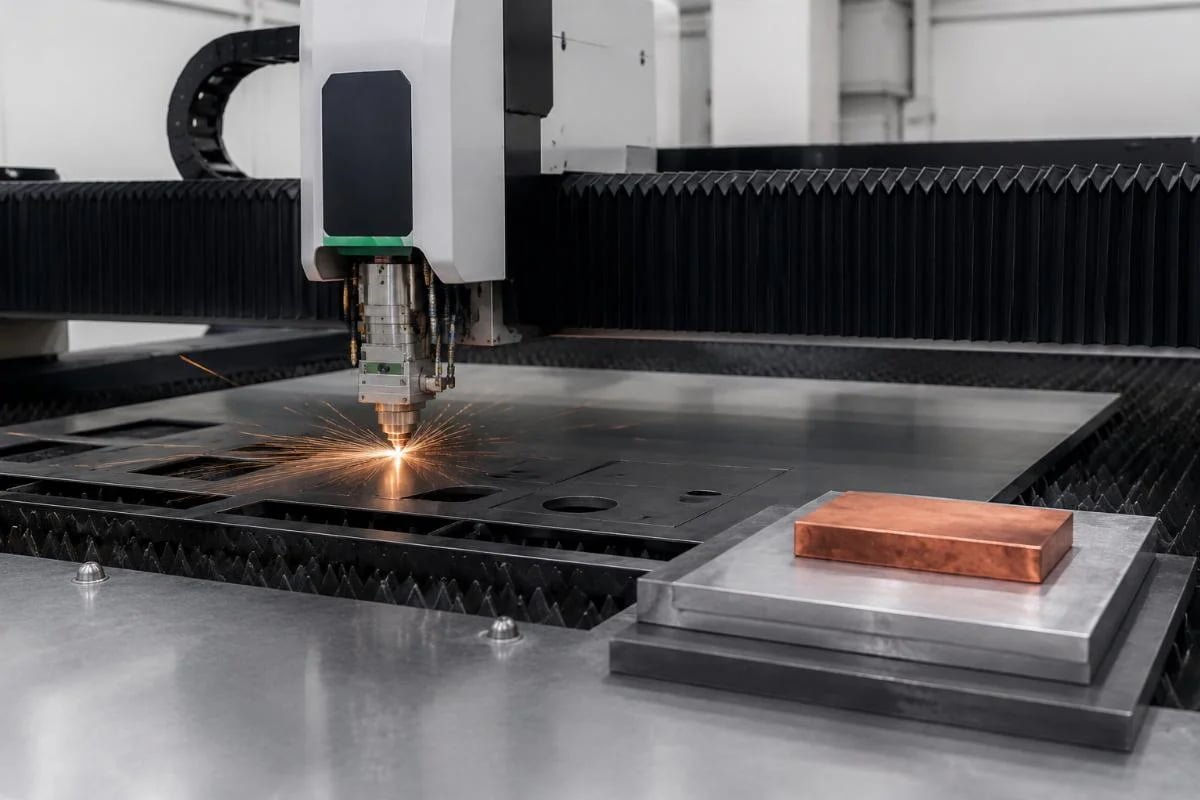
The cutting process is purely mechanical. A CNC knife follows a digital path and physically separates material along a programmed contour. No heat, no chemical reaction, no lubricant spray. The blade itself is typically made from high-carbon steel or tungsten carbide[^3], materials chosen for durability and precision, not for chemical interaction.
| Process Step | Substance Introduced | Regulatory Implication |
|---|---|---|
| Material loading | None | Material retains original certification |
| Blade contact | None (mechanical pressure only) | No contamination pathway |
| Cutting motion | None | No residue transfer |
| Finished part removal | None | Material properties unchanged |
The work surface is usually a PVC, rubber, or bristle mat designed to support the material without leaving marks. These contact surfaces are selected for inertness, not for compliance approval, because they do not chemically interact with the cut material. If a buyer processes food-contact materials, the responsibility to verify that the material itself meets FDA 21 CFR 177 standards remains with the material supplier[^4], not the equipment manufacturer. We provide a contamination-free cutting environment, but we do not certify the material's chemical composition.
I once assisted a buyer who was preparing for an ISO 22000 audit. The auditor asked to see our equipment's material contact test report. I clarified that the blade and mat do not transfer substances, so there is no "contact approval" equivalent to food-contact plastic film certification. The auditor agreed and moved the focus back to the buyer's material traceability documentation. That redirection saved the buyer from requesting a compliance document that does not exist in the equipment domain.
What Compliance Does the Equipment Manufacturer Actually Handle?
We are responsible for manufacturing safety and operational standards. These fall under directives like CE marking (for European markets), electrical safety standards (such as IEC 60204), and mechanical safety requirements (ISO 12100)[^5]. These standards ensure that the machine does not pose a risk to the operator, that electrical components are properly insulated, and that emergency stop functions work as intended.
Our compliance scope ends at the machine's physical and electrical integrity. It does not extend to the chemical composition or regulatory approval of the materials being processed.
When a buyer asks for ROHS compliance, I confirm that our electrical components meet ROHS restrictions on hazardous substances like lead or cadmium[^6]. But ROHS does not govern the plastic film, leather, or composite material being cut. That material's ROHS status is determined by its own supplier chain. Similarly, if a buyer needs REACH compliance for an automotive interior component, the REACH obligation applies to the material's chemical formulation, not to the blade that cuts it.
I have seen export manufacturers request a full FDA dossier for the cutting machine, believing that customs will reject the shipment without it. In reality, customs inspects the final product's material compliance, not the equipment used in its production. The machine's export documentation focuses on HS code classification, voltage compatibility, and country-specific safety certifications, not on material purity standards.
How Should Buyers Structure Their Compliance Checklist?
The checklist should separate equipment verification from material verification. For equipment, buyers should ask:
- Does the machine carry CE marking or equivalent safety certification for the target market?
- Are electrical components rated for the local voltage and frequency?
- Does the emergency stop function meet ISO 13850 requirements?[^7]
- Is the user manual available in the required language with safety warnings?
For materials, buyers should ask their material supplier:
- Does the material meet FDA 21 CFR 177 for food contact (if applicable)?[^8]
- Does the material comply with REACH SVHC restrictions (if exporting to the EU)?[^9]
- Does the material meet ROHS limits for restricted substances (if used in electronics)?
- Is a material safety data sheet (MSDS) available for traceability?
| Verification Target | Responsible Party | Typical Documentation |
|---|---|---|
| Equipment safety | Equipment manufacturer | CE certificate, electrical test report |
| Material purity | Material supplier | FDA declaration, REACH compliance statement |
| Finished product compliance | Buyer (end manufacturer) | Product test report, third-party audit |
This separation clarifies where audit energy should go. A buyer does not need to ask us for FDA approval because we do not produce or supply the material. We provide a tool that does not interfere with the material's pre-existing compliance status. A procurement manager at a food packaging company once told me this framework helped him explain to his quality team why they were requesting the wrong documents from us. Once the team understood the boundary, they redirected their audit focus to the film supplier, where the actual compliance risk lived.
What Happens When Buyers Ignore the Compliance Boundary?
Misallocated compliance effort delays procurement and increases costs. I have seen buyers spend months requesting material test reports from equipment suppliers, only to realize later that those documents do not exist. Meanwhile, the material supplier's certification sat unreviewed in their inbox.
The risk is not that the equipment introduces contamination. The risk is that the buyer wastes time auditing the wrong link in the supply chain.

In one case, an automotive interior supplier required us to provide a REACH declaration for the entire machine. We explained that REACH applies to chemical substances, and the machine as a mechanical assembly does not fall under REACH's scope[^10]. The buyer insisted, so we provided a component-level ROHS declaration for electrical parts, which was the closest equivalent. This satisfied their internal audit, but the entire process delayed procurement by six weeks. The actual compliance gap—unverified flame retardant levels in the fabric being cut—remained unaddressed until the buyer's own testing revealed it.
Another buyer requested a "non-toxic certification" for the blade. We clarified that the blade is made from high-carbon steel, which is not classified as a toxic substance. The buyer later realized that their client's requirement was not about blade toxicity but about ensuring that the cut fabric did not contain azo dyes[^11], a material-level issue unrelated to our equipment. Once this was clarified, the buyer shifted their focus to dyestuff testing and placed the equipment order without further delay.
How Can Pre-Sales Communication Prevent These Misunderstandings?
Clear role definition during the inquiry stage prevents downstream friction. When a buyer asks about "additive approval," I first ask what final product they are manufacturing and what regulatory standard they must meet. This reveals whether their concern is about equipment safety, material purity, or a third issue like process validation.
If the buyer is targeting FDA food contact compliance, I confirm that our machine does not introduce substances, and I recommend that they request FDA compliance documentation from their material supplier. If the buyer is targeting CE marking for export to Europe, I provide our CE certificate and explain that it covers machinery safety, not material composition. This upfront clarification prevents the buyer from building a compliance strategy based on incorrect assumptions.
I also show buyers how our equipment is designed to avoid contamination. The blade holder is made from anodized aluminum, chosen for corrosion resistance and ease of cleaning[^12]. The work surface is replaceable, so if a buyer processes different materials with different compliance requirements, they can swap surfaces to prevent cross-contamination. These design features support the buyer's compliance goals without creating new certification obligations.
Conclusion
CNC knife cutting machines do not use additives, and their compliance scope is limited to manufacturing safety standards, not material certifications. Understanding this boundary helps buyers allocate audit effort correctly and avoid procurement delays caused by misallocated compliance requests.
[^1]: "2.101 Definitions. - Acquisition.GOV", https://www.acquisition.gov/far/2.101. Research on supply chain management indicates that regulatory compliance complexity, particularly regarding equipment versus material certification boundaries, creates procurement challenges across regulated industries including food, medical, and automotive sectors. Evidence role: general_support; source type: research. Supports: that compliance complexity creates challenges across manufacturing supply chains. Scope note: General supply chain research may not specifically document the equipment-material compliance confusion pattern described [^2]: "Inventory of Food Contact Substances Listed in 21 CFR - FDA", https://www.fda.gov/food/packaging-food-contact-substances-fcs/inventory-food-contact-substances-listed-21-cfr. The FDA regulates food-contact substances under 21 CFR, REACH addresses chemical safety in the EU market, and ROHS restricts hazardous substances in electrical equipment, though each framework has distinct scope and jurisdictional boundaries. Evidence role: general_support; source type: government. Supports: that FDA, REACH, and ROHS regulate materials in specific contact scenarios. Scope note: Each regulation has specific applicability criteria not detailed in the source claim [^3]: "Tungsten carbide - Wikipedia", https://en.wikipedia.org/wiki/Tungsten_carbide. High-carbon steel and tungsten carbide are widely used in precision cutting applications due to their hardness and wear resistance, though specific blade material selection varies by manufacturer and application requirements. Evidence role: general_support; source type: education. Supports: that high-carbon steel and tungsten carbide are common cutting tool materials. Scope note: Does not specifically verify prevalence in CNC knife cutting systems [^4]: "21 CFR Part 177 -- Indirect Food Additives: Polymers - eCFR", https://www.ecfr.gov/current/title-21/chapter-I/subchapter-B/part-177. Under FDA regulations, manufacturers and suppliers of food-contact materials bear responsibility for ensuring their products comply with applicable food additive regulations, including 21 CFR 177, though ultimate compliance responsibility may be shared across the supply chain. Evidence role: general_support; source type: government. Supports: that material suppliers have compliance obligations for food-contact substances. Scope note: Specific responsibility allocation depends on contractual relationships and may vary by jurisdiction [^5]: "IEC 60204 - Wikipedia", https://en.wikipedia.org/wiki/IEC_60204. CE marking indicates conformity with EU safety directives for machinery, IEC 60204 specifies electrical safety requirements for industrial machines, and ISO 12100 provides principles for machinery risk assessment, though applicability depends on equipment type and target market. Evidence role: general_support; source type: institution. Supports: that these standards govern machinery safety in relevant markets. Scope note: Does not confirm specific applicability to CNC knife cutting machines [^6]: "RoHS - Wikipedia", https://en.wikipedia.org/wiki/RoHS. The EU ROHS Directive (2011/65/EU) restricts the use of ten hazardous substances in electrical and electronic equipment, including lead, cadmium, mercury, and hexavalent chromium, with specific concentration limits for each substance. Evidence role: definition; source type: government. Supports: that ROHS restricts lead, cadmium, and other hazardous substances. [^7]: "ISO 13850:2015 - Safety of machinery — Emergency stop function", https://www.iso.org/standard/59970.html. ISO 13850 defines safety requirements and guidance for the design and application of emergency stop functions on machinery, specifying functional principles and performance criteria for emergency stopping devices. Evidence role: definition; source type: institution. Supports: that ISO 13850 specifies emergency stop function requirements. [^8]: "21 CFR Part 177 -- Indirect Food Additives: Polymers - eCFR", https://www.ecfr.gov/current/title-21/chapter-I/subchapter-B/part-177. Title 21 CFR Part 177 of the U.S. Code of Federal Regulations establishes regulations for indirect food additives, specifically polymers intended for use in food-contact applications, including specifications for composition and use conditions. Evidence role: definition; source type: government. Supports: that 21 CFR 177 regulates food-contact polymers. [^9]: "Substance of very high concern - Wikipedia", https://en.wikipedia.org/wiki/Substance_of_very_high_concern. Under the EU REACH Regulation (EC 1907/2006), Substances of Very High Concern (SVHCs) are identified and added to a candidate list, triggering notification obligations when present above 0.1% weight-by-weight in articles, with some substances subject to authorization or restriction. Evidence role: definition; source type: government. Supports: that REACH regulates SVHCs with notification and restriction requirements. [^10]: "The REACH Scope - Enviropass Expertise Inc.", https://getenviropass.com/reach-scope/. REACH regulates the registration, evaluation, and authorization of chemical substances, with specific provisions for articles (objects with a special shape or design) that may contain regulated substances, though the regulation focuses on chemical composition rather than mechanical function. Evidence role: mechanism; source type: government. Supports: that REACH primarily regulates chemical substances but includes provisions for articles. Scope note: REACH can apply to components within mechanical assemblies if they contain regulated substances above threshold concentrations [^11]: "Detection of azo dyes and aromatic amines in women under garment", https://pmc.ncbi.nlm.nih.gov/articles/PMC5991632/. Some azo dyes can release carcinogenic aromatic amines and are restricted in textiles and leather articles under various regulations including EU REACH Annex XVII, which prohibits certain azo colorants in consumer products that come into direct and prolonged contact with skin. Evidence role: general_support; source type: government. Supports: that certain azo dyes are restricted due to health concerns. [^12]: "Research on corrosion resistance of anodized and sealed 6061 ...", https://www.sciencedirect.com/science/article/pii/S1452398123001190. Anodizing creates a protective oxide layer on aluminum surfaces through electrochemical treatment, enhancing corrosion resistance, surface hardness, and ease of cleaning compared to untreated aluminum, making it suitable for industrial equipment applications. Evidence role: mechanism; source type: education. Supports: that anodizing improves aluminum's corrosion resistance and cleanability.